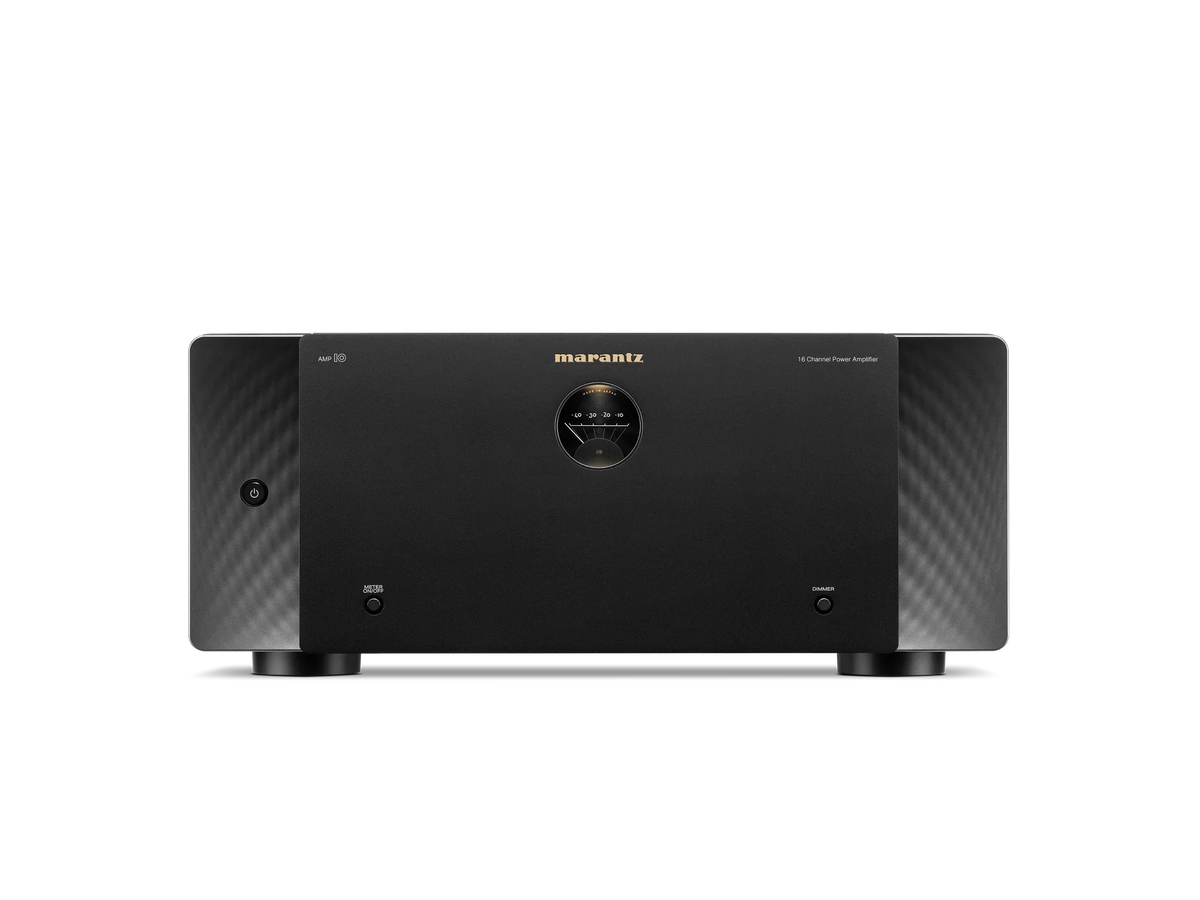
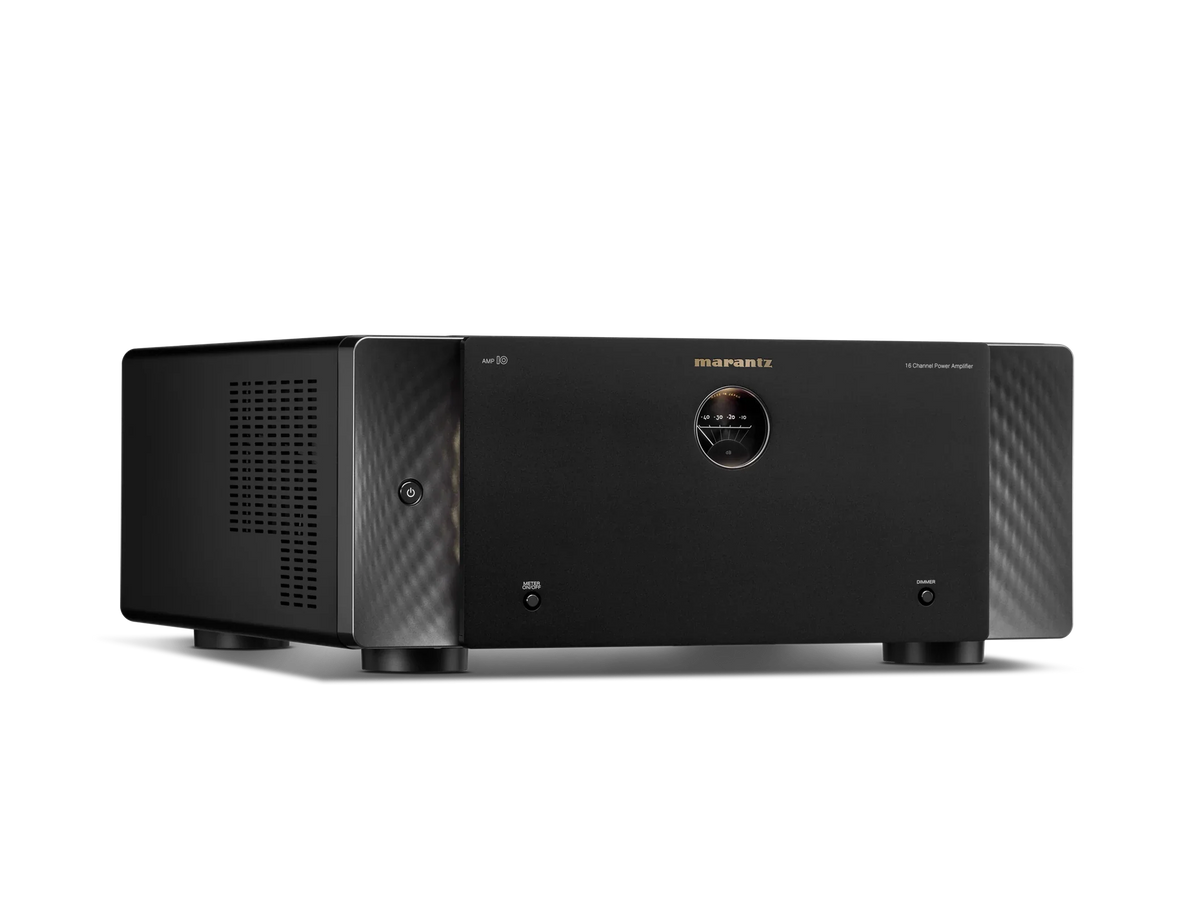
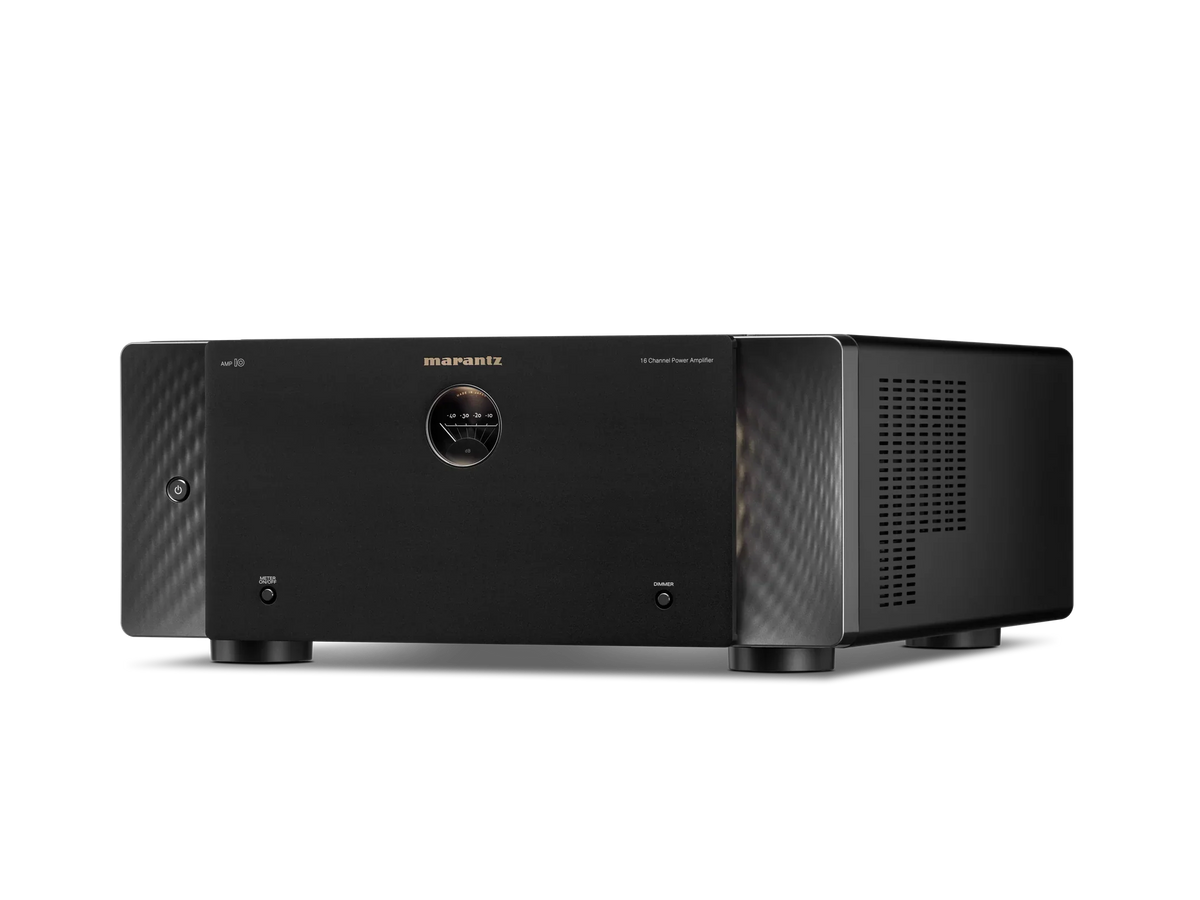
AMP 10: 16 power channels with one clear purpose
A 200-watt-per-channel amplifier with HDAM modules and configurable switching stages for a reference immersive array in one chassis.
AMP 10 neither selects sources nor decodes formats. It receives signals from AV 10 and supplies current to the loudspeakers. Its 16 channels at 200 watts define the size of system it can support in one enclosure.
Key features
- 16 channels at 200 watts
- custom-developed switching amplification
- HDAM modules
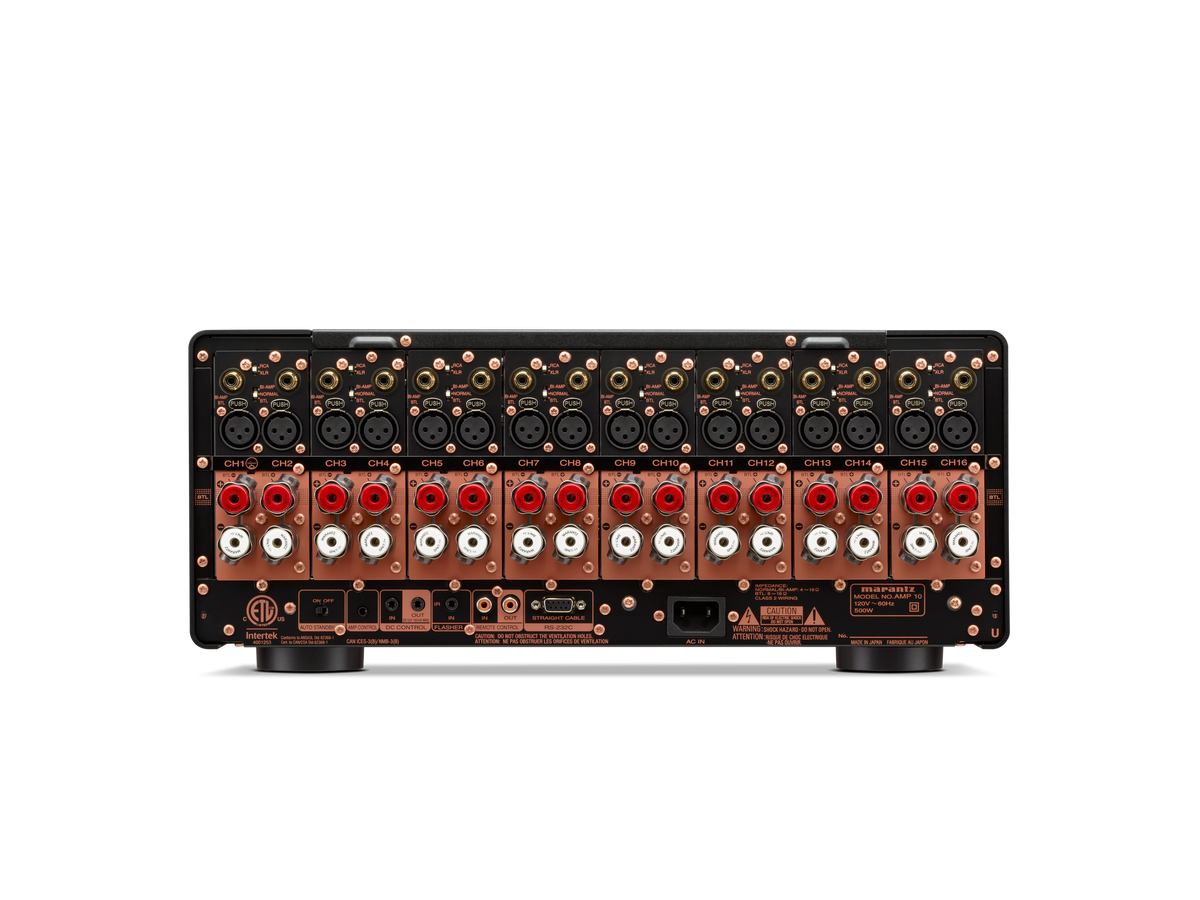
- selectable RCA and XLR inputs
- normal, bi-amp and BTL modes
- linked control with AV 10
Sixteen stages, one rack node
AMP 10 replaces a bank of power amplifiers where the design contains many loudspeakers. Its density reduces shelves, mains leads and control links, but concentrates heat and wiring. Supply provision, ventilation and numbering all sixteen routes become installation tasks rather than afterthoughts.
The partner designed around AV 10
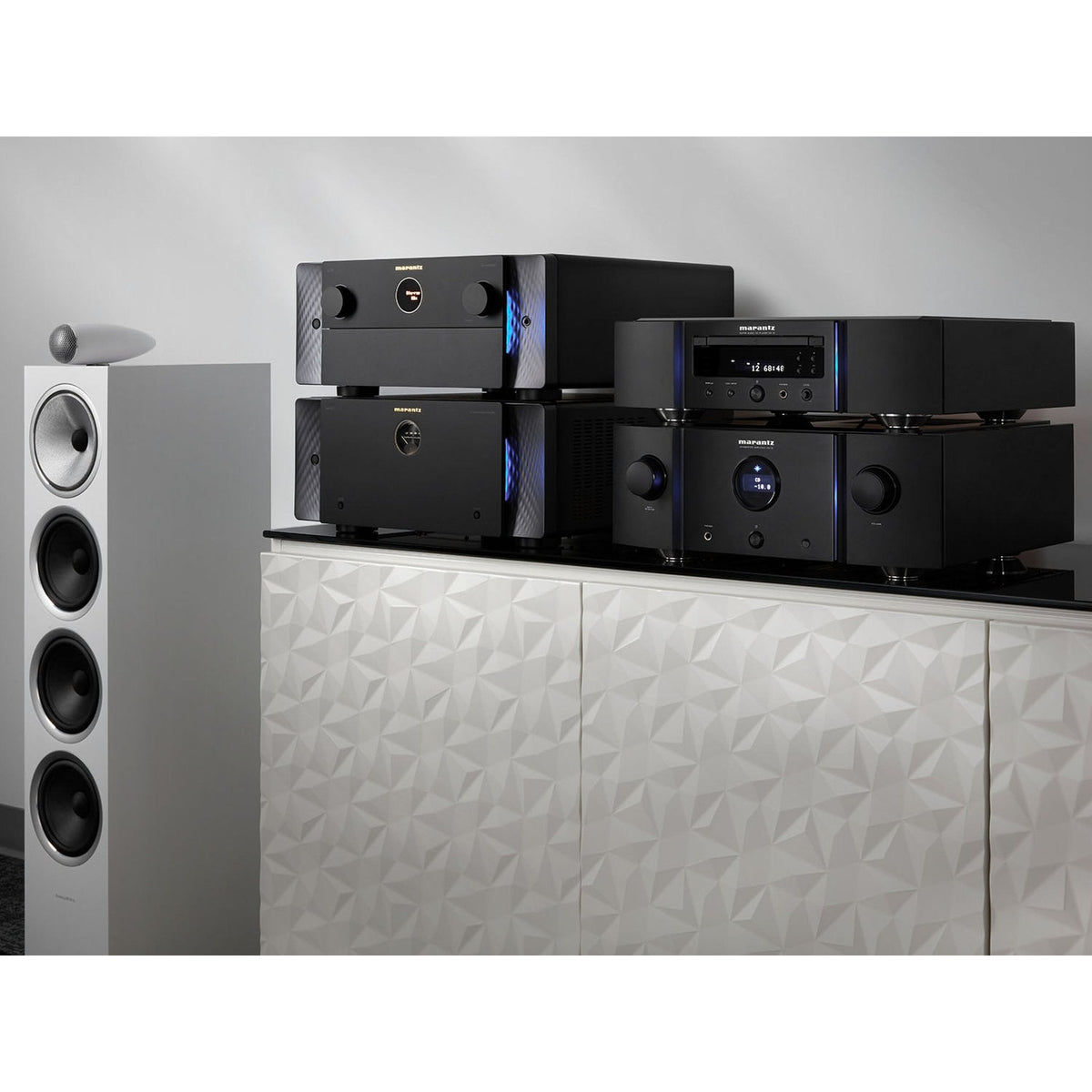
Balanced links between AV 10 and AMP 10 keep a remote rack orderly and provide almost one power path for each 15.4 processor output. The control cable coordinates power and illumination. Video processing and amplification still retain separate upgrade cycles within one coherent platform.
Bi-amp and BTL alter the design
Selectable modes can assign two stages to one loudspeaker or bridge them for greater output. They are not casual sound settings: each choice reduces the available channel count and requires a suitable electrical load. Their value lies in demanding front speakers or a planned upgrade path.
Where bi-amp and bridge modes belong
Sixteen available stages leave room to prioritise front speakers without dismantling the immersive array. Bi-amping divides loudspeaker sections; BTL favours output into fewer loads. Each choice changes channel count and permitted impedance, so it belongs on the theatre's electrical plan.
Choosing the right scale
AMP 10 provides the highest channel count: four more than AMP 20 and ten more than AMP 30. With AV 10 it covers a 15.4 layout while retaining assignment or bi-amp flexibility. If the design ends at twelve channels, AMP 20 avoids unused capacity without reducing rated power per channel. Treat it as infrastructure: suitable mains supply, ventilation, sixteen signal cables and matching routes to the loudspeakers. Its channel density simplifies the rack only when every connection is planned and documented accurately. Labelled terminations will also make later servicing far safer.