A three-way with a changeable orientation
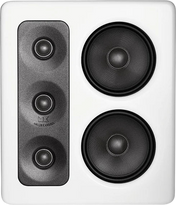
CWM8.3D rotates its central array for vertical or horizontal placement.
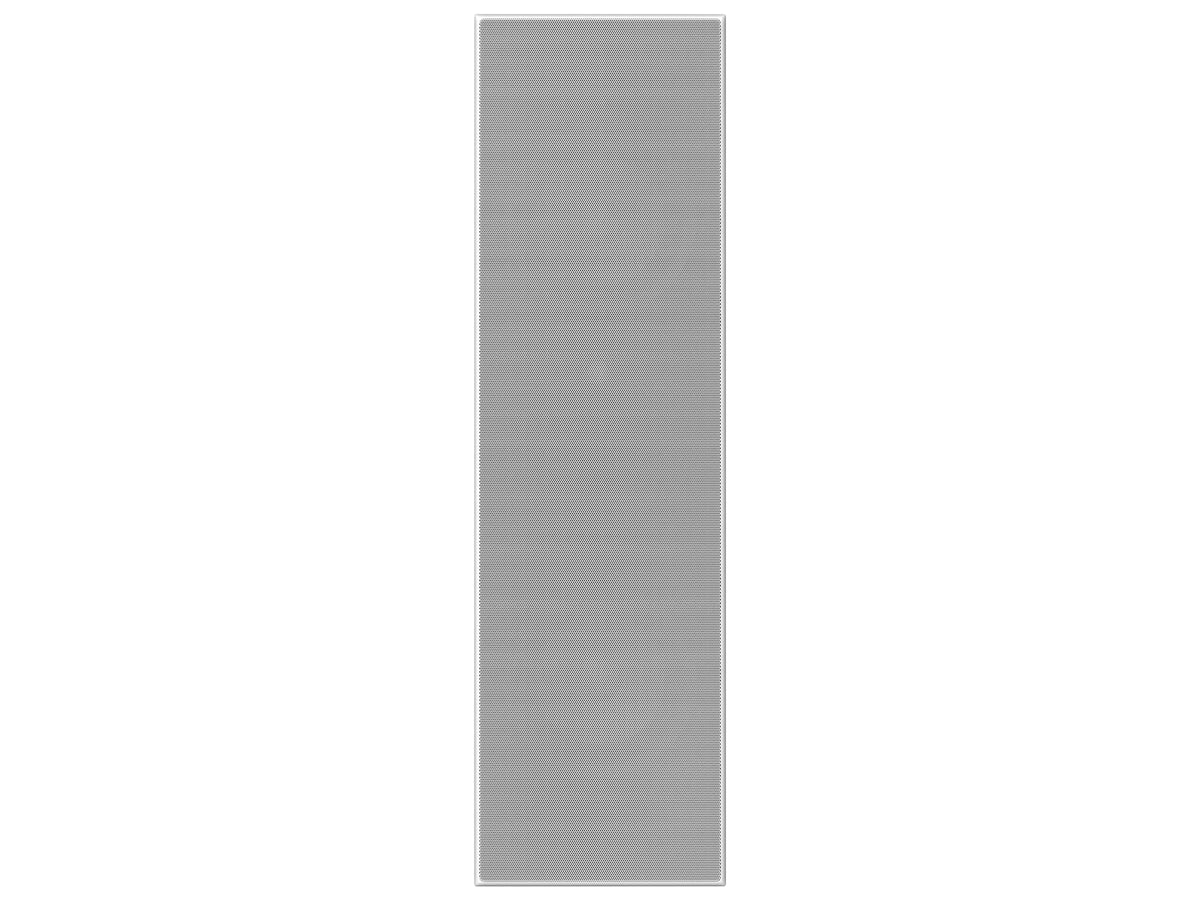
The single Bowers & Wilkins CWM8.3D is an in-wall system with an 864 × 238 mm cut-out and 880 × 254 mm frame. The speaker body is 99 mm deep; with BB CWM8.3 back box, total depth from the surface reaches 347 mm. The enclosure extends 1660 mm high and 399 mm wide, so measure this space before fixing studs and openings.
Key features
- Cut-out 864 × 238 mm; frame 880 × 254 mm; depth 99 mm.
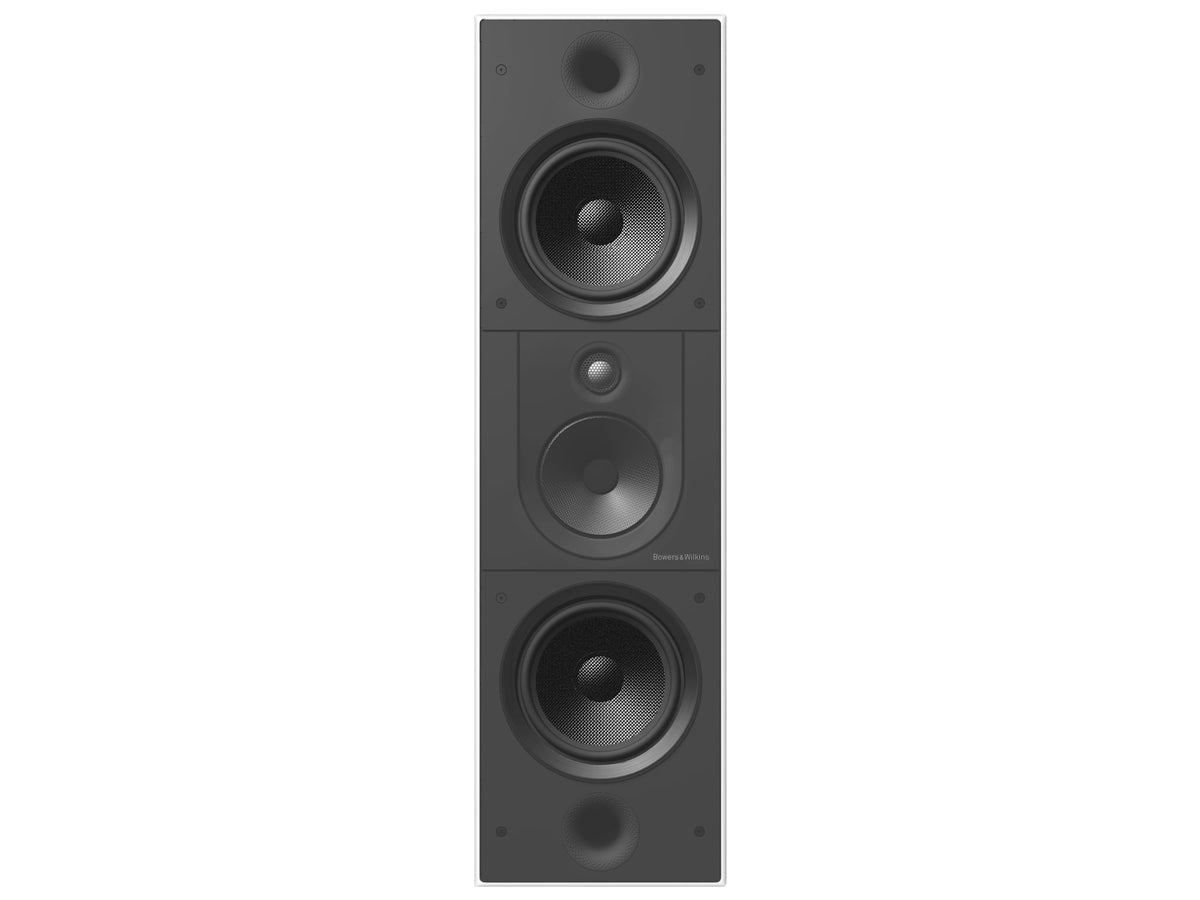
- Twin 180 mm Aerofoil bass, 130 mm Continuum midrange, 25 mm Diamond Dome.
- 8-ohm nominal impedance; recommended 200 W amplification.
- Mini-baffle rotates 90°; BB CWM8.3 back box.
Three ways and a rotating baffle
Two 180 mm Aerofoil woofers, a 130 mm Continuum midrange and 25 mm Diamond Dome tweeter form the system. Its aluminium mini-baffle turns through 90 degrees, permitting vertical or horizontal placement while maintaining the central driver arrangement. The tweeter uses Nautilus tube loading and the architecture includes Flowport. Compared with two-way CWM8.5D, the 8.3D adds a dedicated midrange and second woofer.
Structure and amplification
Recommended amplifier power is 200 W, nominal impedance 8 ohms and sensitivity 89 dB. The -6 dB range spans 30 Hz to 35 kHz. Speaker net weight is 10.9 kg before accounting for the back-box structure. Baffle orientation, rear enclosure and mechanical support should be settled together in the wall plan: the front opening alone does not describe the space required for the complete system. Front protrusion is 8 mm.
The central driver group rotates 90 degrees, keeping tweeter and midrange correctly arranged when the outer frame changes orientation. Do not mistake the 238 mm cut-out width for the whole space required: the rear enclosure extends far beyond the visible surface. Its lower -6 dB point is 30 Hz rather than CWM8.5D's 35 Hz, and recommended amplification rises from 120 to 200 W. At 10.9 kg, the speaker needs firm support. In a wall with studs, services and bracing, reserve the back-box space before locating the grille. Horizontal alignment may suit a position beneath a screen, while vertical alignment can work at its sides; confirm either arrangement against the actual theatre plan. The rotating baffle changes driver alignment, not the need for the full enclosure depth.