A square three-way with its own enclosure
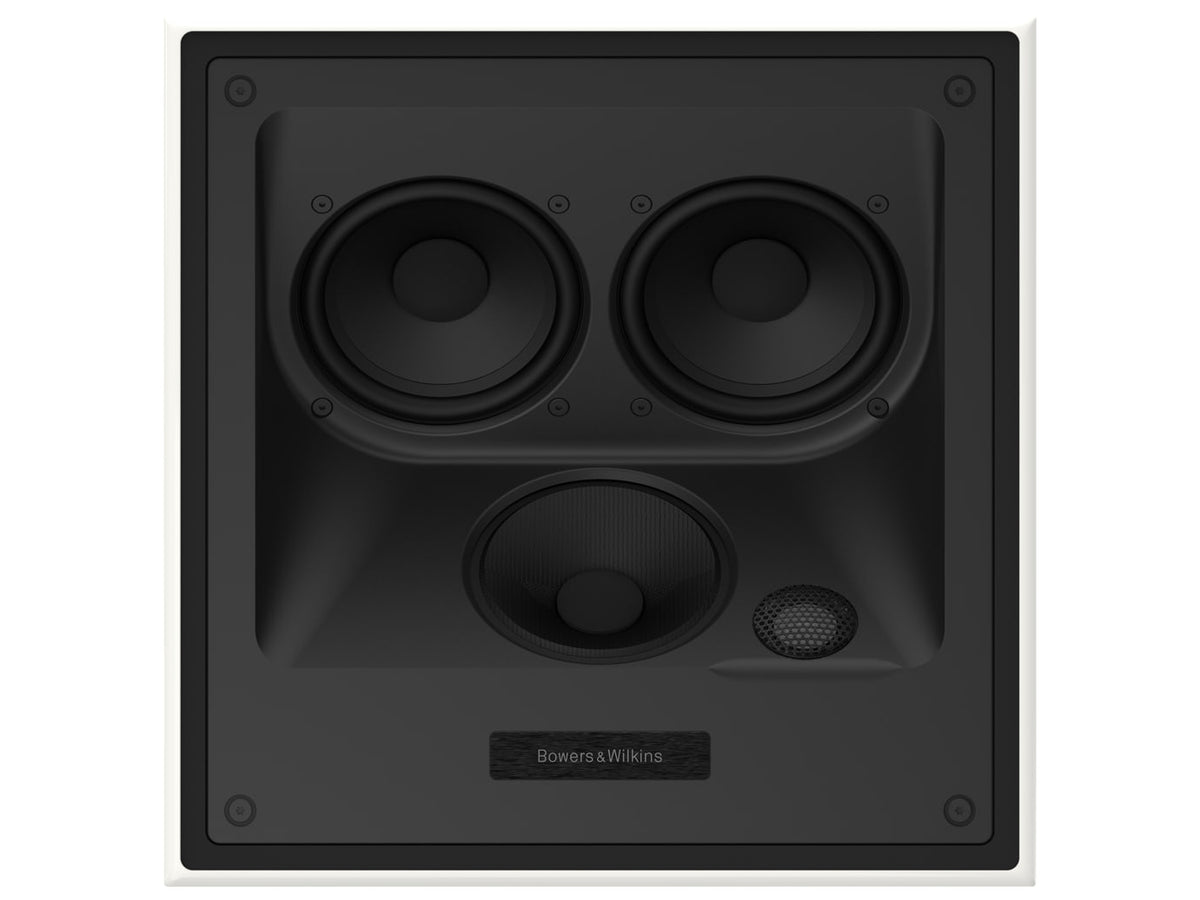
CCM7.3 S2 brings four drive units and an integral back box into the ceiling.
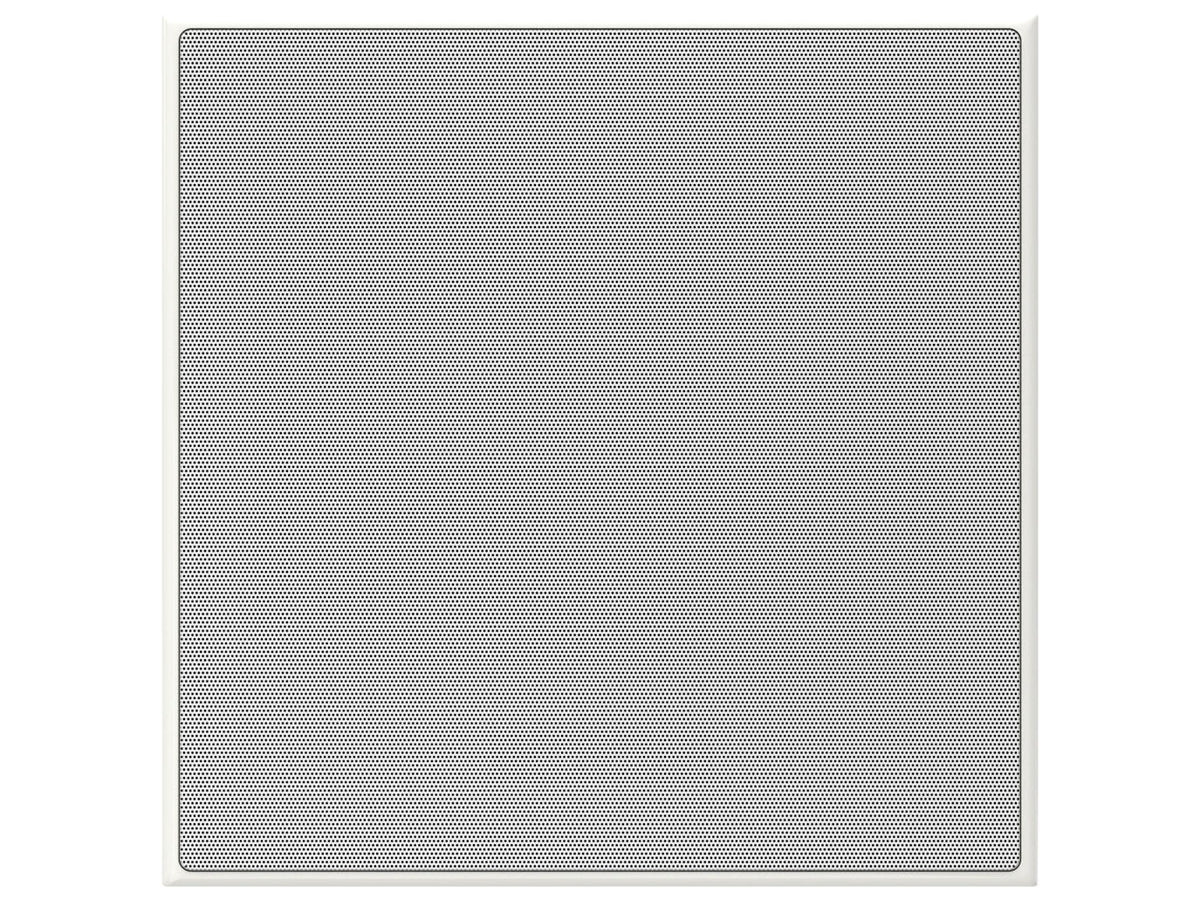
The Bowers & Wilkins CCM7.3 S2 pair needs two square 332 × 332 mm cut-outs, or 335 × 335 mm with the pre-mount kit. The frame is 355 × 355 mm, the cabinet depth 194.5 mm and front protrusion 8 mm. A diameter is not the key dimension here: measure width, height and enough clear depth for the speaker and its integrated enclosure.
Key features
- Cut-out 332 × 332 mm; frame 355 × 355 mm; depth 194.5 mm.
- Drive units: two 130 mm Aerofoil bass drivers, 100 mm Continuum FST midrange and 25 mm Carbon Dome tweeter.
- Impedance: 8 ohm, 3.1 ohm minimum; power: 25–200 W recommended.
- integrated back box; 335 × 335 mm cut-out with PMK 7C
Three ways for theatre and stereo
Two 130 mm Aerofoil Profile bass units work with a 100 mm Continuum FST midrange and 25 mm Carbon Dome tweeter. The integral back box reduces sound transfer to adjacent spaces and defines the acoustic loading, making the installation more predictable. This is a three-way layout, unlike the two-way CCM7.5 S2 with its single angled bass/midrange driver. The square frame also aligns naturally with room geometry.
Matching and dimensional checks
Sensitivity is 90 dB. Nominal impedance is 8 ohms with a 3.1-ohm minimum, a significant figure for amplifier choice. Recommended power is 25 to 200 W into 8 ohms on unclipped programme. Response is 55 Hz to 28 kHz within ±3 dB; the -6 dB points are 52 Hz and 33 kHz. PMK 7C is the specified kit. Check the difference between standard and kit cut-outs before cutting. Net weight including accessories is 9 kg per speaker.
The built-in back box makes the acoustic loading less dependent on the free volume above the ceiling and helps contain sound reaching the room above. Structural support, wiring and the mechanical load of each unit still need checking. At 194.5 mm, depth is substantially greater than CCM7.5 S2's 128 mm; a void that accepts the latter will not necessarily fit the three-way. The square shape also demands careful edge alignment. In a cinema room, its three-way layout can be considered across multiple positions while keeping listening geometry consistent. Plan the openings and support before finishing the ceiling surface.