Six drivers, 450 watts and HDMI ARC in one wireless music system
Naim MU-SO 2 integrates loudspeakers, six amplifier channels, DSP and network streaming in a single 62.8 cm-wide unit.
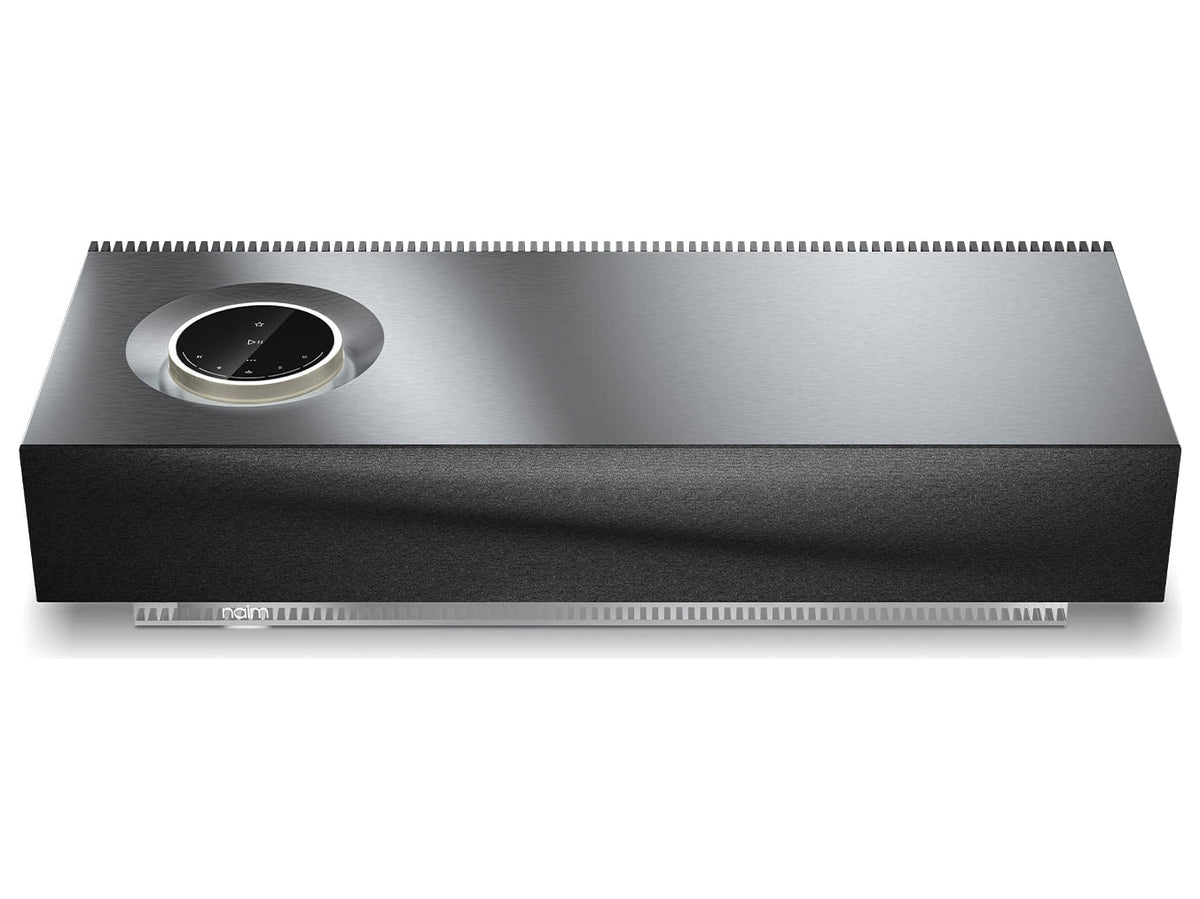
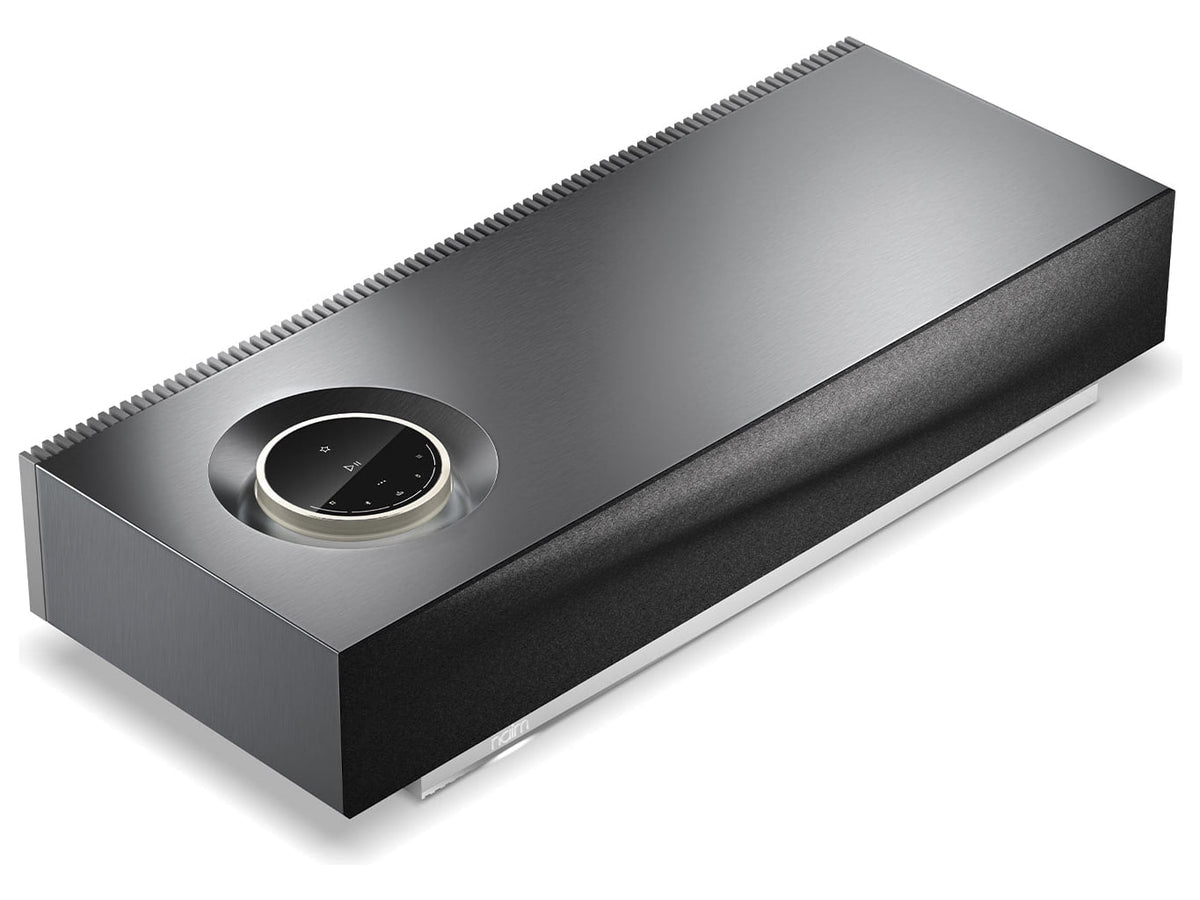
The single Naim MU-SO 2, currently named Mu-so 2nd Generation, is a complete system that requires no external loudspeakers. Its 3-way stereo layout uses six drivers and six 75 W amplifiers for 450 W total output, with multicore DSP processing and HDMI ARC for combining music and television audio in the same chassis.
Key features
- 3-way stereo system with six drivers in a DSP-optimised vented enclosure
- 450 W total output distributed across six 75 W amplifier channels
- Multicore DSP with a quoted processing capability of 2000 MIPS
- HDMI ARC with CEC for television connection
- 3.5 mm analogue, optical S/PDIF and USB inputs
- WAV up to 32-bit/384 kHz, FLAC, AIFF and ALAC up to 24-bit/384 kHz, plus DSD128
- Wireless playback through AirPlay 2, Chromecast, Qobuz Connect, Roon Ready, Spotify Connect, TIDAL Connect, Bluetooth and UPnP
- Touch interface with 15 controls and proximity-sensing rotary volume dial
- Automation integration available for Control4, Crestron, Elan, RTI and Savant
Mu-so is not simply a Uniti with speakers attached
Atom, Star Lite and Nova require a pair of passive loudspeakers and leave the speaker load to the system designer. Mu-so 2 instead integrates transducers, amplification and DSP into one acoustic design: there are no external speaker terminals and the electronics are configured specifically for the enclosure.
Music, television and multiroom from the same unit
HDMI ARC allows Mu-so 2 to become the television audio system, while Ethernet and Wi-Fi place it on the Naim network. Party Mode can synchronise up to six compatible streamers and the Focal Naim app manages services, local libraries and settings without a separate preamplifier.
The grille can be replaced
The front panel can be personalised with optional grilles made specifically for Mu-so 2nd Generation. The change is purely external: electronics, drivers and DSP tuning remain untouched, so the grille can be selected as an accessory without altering the audio configuration of the system.