Pure analogue
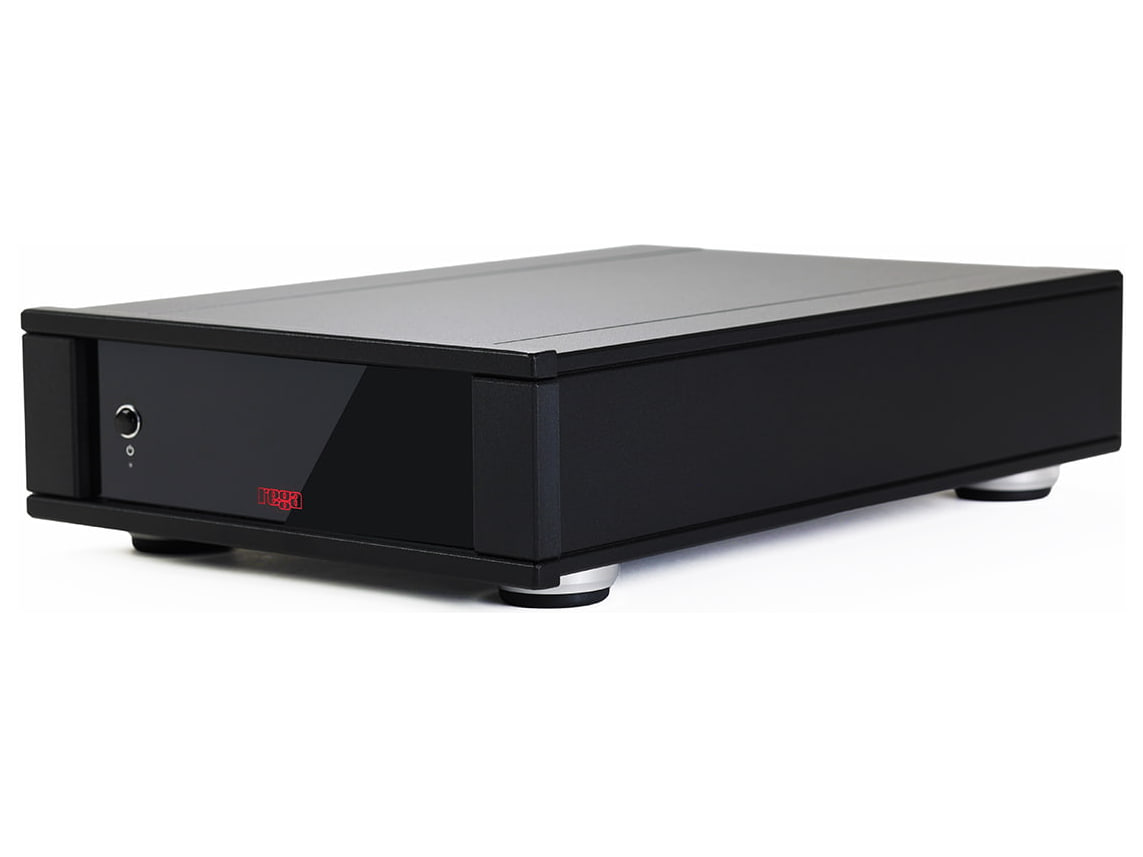
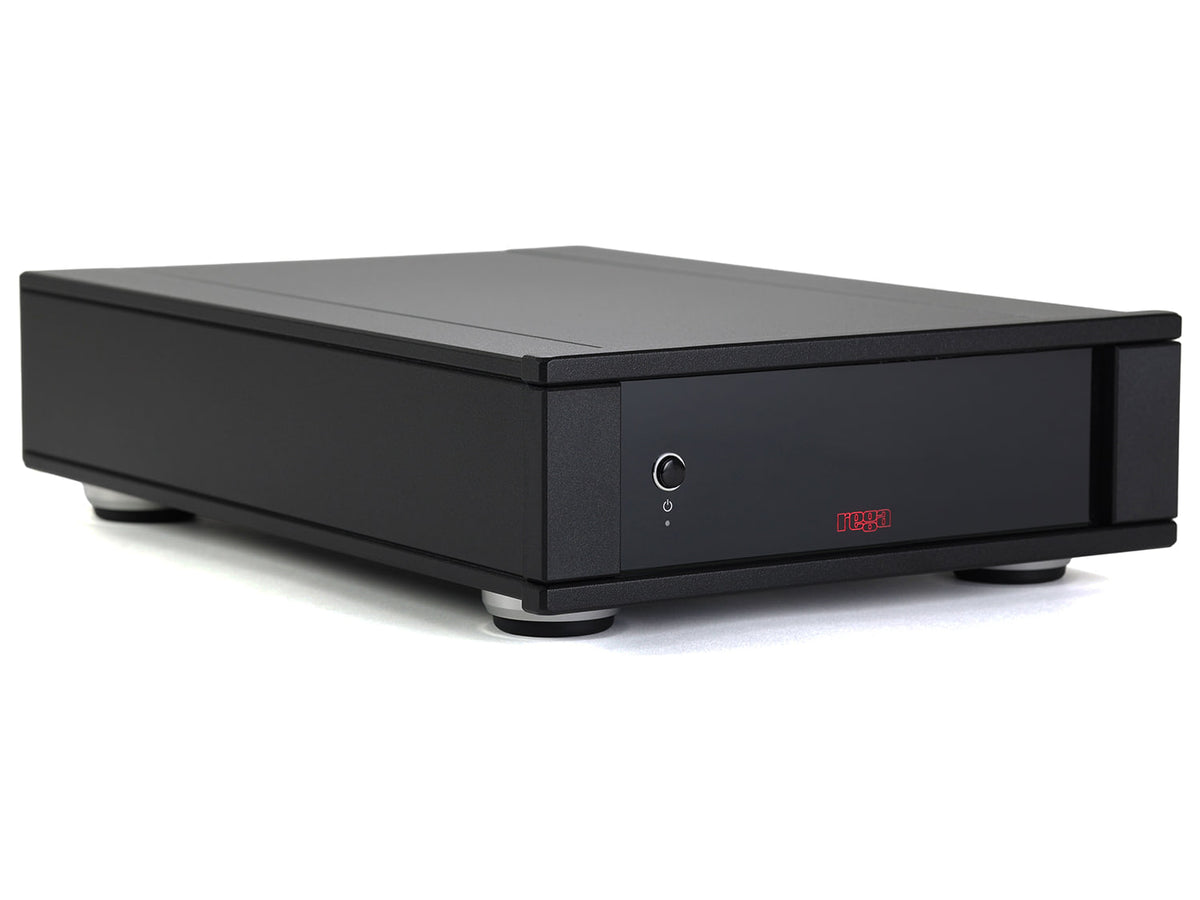
Rega Aos MC is a fully analogue, adjustable MC phono stage with a two-stage circuit based on the Aura Reference, aluminium chassis and automatic standby.
Aos MC is dedicated to low-output moving-coil cartridges and uses a circuit developed from the Reference Aura phono-stage design. The two-stage structure is entirely analogue and does not place digital control circuitry in the audio path. Available gain and loading adjustment allow pairing with a wide range of MC cartridges, while Rega's half-width aluminium chassis shields the electronics from external RFI interference.
Key features
- Dedicated MC phono stage
- Fully adjustable loading
- Factory preset for Rega MC cartridges
- Circuit derived from the Aura MC of the Reference range
- Custom half-width aluminium chassis
- Automatic standby function
Two fully analogue stages
A complementary Class A amplifier of symmetrical design, built on ultra-low-noise Linear Systems FETs, forms the first stage. The transistors are selected and matched, and they operate with no bias current through the coil of the cartridge, which leaves its delicate magnetic geometry unaltered. The passive high-frequency section of the RIAA equalisation is driven by this stage; the second is a symmetrical differential Class A amplifier with common-base driver and also handles the active low-frequency RIAA section.
Adjustable loading and sensitivity
The MC input allows resistive loading values from 70 to 400 ohms and two capacitance values, 1000 and 4300 pF. A rear-panel control changes input sensitivity by 6 dB, allowing Aos MC to suit cartridges with different output levels. Factory settings are prepared for Rega MC cartridges, while the available adjustment range also makes the phono stage suitable for many third-party models and keeps those settings out of everyday operation once configured.
Shielding and control
The all-aluminium enclosure helps shield the circuit from stray RFI, while a self-adjusting servo compensates for changes caused by ambient or operating temperature. Automatic standby places the unit in standby after a period without signal and can be disabled through the rear DIP switches. The design keeps service circuitry separate from the signal path and favours an essential analogue architecture, avoiding unnecessary components that could interfere with the very low-level signal generated by the cartridge.